The Only Next.js Stack You'll Ever Need
Building rock-solid web applications with the best tools in the React ecosystem.

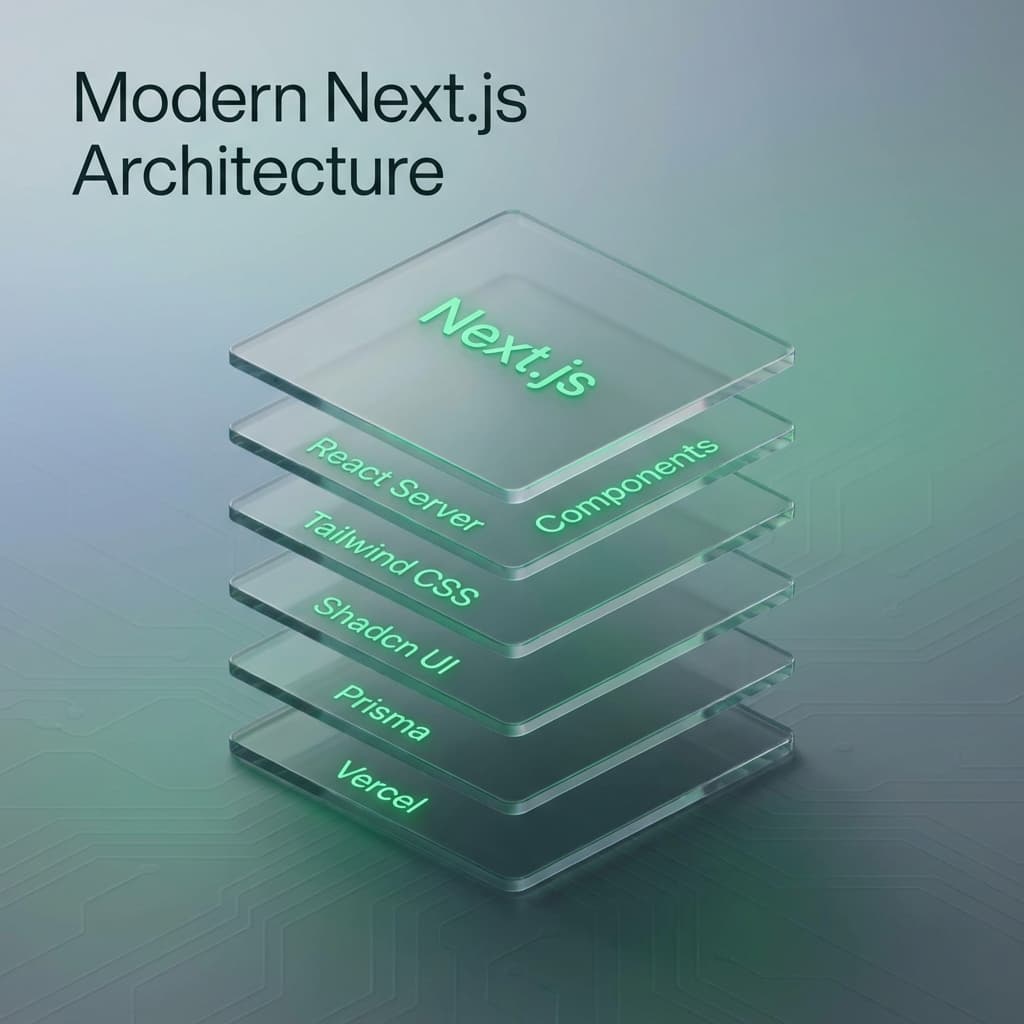
The React ecosystem moves fast. What was "best practice" twelve months ago is often legacy today. In 2026, building a solid, scalable web application requires a carefully curated set of tools that work harmoniously together.
This is the "bitarch" stack—a selection of libraries I've refined through building production systems that prioritize developer experience, type safety, and end-user performance.
The Core: Next.js
Next.js remains the gold standard. In 2026, we are fully leaning into React Server Components (RSC). It’s no longer just a framework; it’s the architecture of the web. The ability to fetch data on the server and stream it to the client is transformative for performance.
Key Benefits:
- Automatic code splitting and prefetching
- Fluid Server Actions for mutations
- Advanced caching strategies
Design & Styling
#Tailwind CSS
Utility-first CSS is no longer a debate—it’s the winner. The speed of development and the lack of "CSS inheritance hell" make it essential. With the latest versions, the compiler is faster than ever, and the integration with modern design systems is fluid.
#shadcn/ui
I don't use "component libraries" in the traditional sense. I use shadcn/ui. It’s a collection of re-usable components that you copy and paste into your apps. You own the code. It’s built on top of Radix UI, providing world-class accessibility out of the box.
Forms & Validation
#Zod
Zod is my go-to for schema validation. It allows you to define a schema once and use it for type-safety across your entire application—from API responses to form data. It’s the "source of truth" for your data structures.
#React Hook Form
Handling forms in React can be painful. React Hook Form makes it performant and simple by using uncontrolled components. When paired with the Zod resolver, you get a world-class form experience with minimal re-renders and perfect type safety.
Advanced UI & Interactivity
#motion.dev
For micro-interactions and smooth page transitions, Motion (formerly Framer Motion) is unbeatable. It provides a declarative API that makes complex animations feel like writing simple CSS, while handling the heavy lifting of layout animations.
#React Flow
For niche applications requiring node-based UIs or complex diagramming, React Flow is the specialized tool of choice. It’s highly customizable and allows you to build powerful, interactive canvas-based experiences with ease.
#MUI Charts
When it comes to data visualization, MUI Charts provides a robust, accessible, and highly responsive set of components. Whether you need simple sparklines or complex multi-axis charts, it integrates beautifully into the modern React ecosystem.
State Management
#Zustand
For global client-side state, Zustand is the clear choice. It’s small, fast, and has a hook-based API that feels like natural React. No more boilerplate, no more complex providers—just a simple, predictable store.
#TanStack Query
While RSCs handle initial data fetching, TanStack Query (React Query) is still vital for managing complex server state on the client. It handles caching, background updates, and optimistic UI with minimal effort. It turns "data fetching" into "state synchronization."
Authentication
Authentication used to be the hardest part of a web app. Now, we have Better Auth or the evolved NextAuth.js.
Better Auth stands out for its extreme type safety and modern database adapters. It treats authentication as a first-class citizen of your application’s architecture, not just a sidecar service.
Final Thoughts
A solid tech stack isn't about using the "coolest" libraries; it's about choosing tools that solve real problems while maintaining high developer velocity. This Next.js stack provides the perfect balance of performance, flexibility, and joy.
Read More from the Author
Spec-Driven Development in Agentic Coding: Moving Beyond Vibe Coding to Deterministic AI Engineering
Why unstructured conversational prompting breaks down at scale, and how Spec-Driven Development (SDD) turns stochastic LLM agents into deterministic, production-grade engineering engines.
Building a Zero-Prompt IDE Telegram Agent
Why I stopped battling headless open-source AI frameworks and built an IDE-in-the-Loop Telegram bot instead.
NX Monorepos: One Repo, CI That Keeps Up
How NX's dependency graph makes CI smarter — running only what changed, catching downstream breakage automatically, and keeping hook times short as the repo grows.